
Octopus Energy Review: 4 Years as a Real Customer (October 2026)
Link checked
Ad/affiliate disclosure: this post contains affiliate links. If you sign up through one I may receive a referral payment, at no extra cost to you and with no reduction to any bonus. I only recommend products I have used myself.This site is run independently and is not part of Octopus Energy. I am not employed by Octopus, and being in their affiliate programme is not a certification, accreditation or formal partnership.Already with Octopus, or a question about your account or tariff? Contact Octopus directly at hello@octopus.energy.
- Trustpilot4.8/5(837,000)
- Citizens Advice3.7/5
Quick answer: Octopus Energy is worth switching to for most households. After four years as a paying customer, my billing has been accurate, the app is the best I have used for a utility, and the one time I phoned support a person answered and fixed it on the call. They are not automatically the cheapest supplier in every region every quarter, so check the price for your own postcode first. If you do switch, use my referral link and we both get £50 credit.
I am not a journalist who trialled an account for a fortnight. I am a customer who pays a real direct debit every month, and I have referred enough people that I hear back when something goes wrong for them. This review is what I have seen, plus published data where my own experience is not enough evidence.
Octopus Energy at a Glance
| UK customers | Over 8 million, as of April 2026 |
| Market position | Largest UK household supplier, roughly one in four households |
| Trustpilot | 4.8 out of 5 from over 837,000 reviews |
| Citizens Advice | 3.67 out of 5, January to March 2026 table |
| Electricity | 100% zero-carbon sources, per Octopus |
| Exit fees | None on variable tariffs |
| Main tariffs | Flexible, Tracker, Agile, Go and the intelligent range |
| Referral | £50 each way for home, £75 each way for business |
| Regulator | Ofgem, plus Energy Ombudsman membership |
My own position for transparency: residential customer for four years, gas and electric on a fixed tariff, no smart meter, a bill of about £145 a month, home in Essex. I run Glide Marketing from that home office on the same residential tariff, which is the normal arrangement for most home-based businesses. I am not an Octopus business energy customer, so nothing in this review is a first-hand account of their business service.
Billing: The Part That Matters Most
The reason most people leave an energy supplier is not price. It is a bill that makes no sense.
In four years my Octopus bills have matched my usage. I do not have a smart meter, so I submit my own readings in the app, and the bill for gas and electric together sits at about £145 a month. The one wobble in four years was a question about a payment and my direct debit, which is the phone call described below.
Two things make the difference here. The first is that submitting a reading takes a minute in the app, so there is no gap for an estimate to fill even without a smart meter. The second is that the account balance is there every time you open the app rather than once a quarter, so a direct debit that is drifting too low shows up as a growing debit balance months before it becomes a shock.
If you have been through a supplier that produced a £900 catch-up bill after a year of underestimating, that visibility is the whole argument.
The App
The Octopus app is the best I have used for a utility, and it is not close.
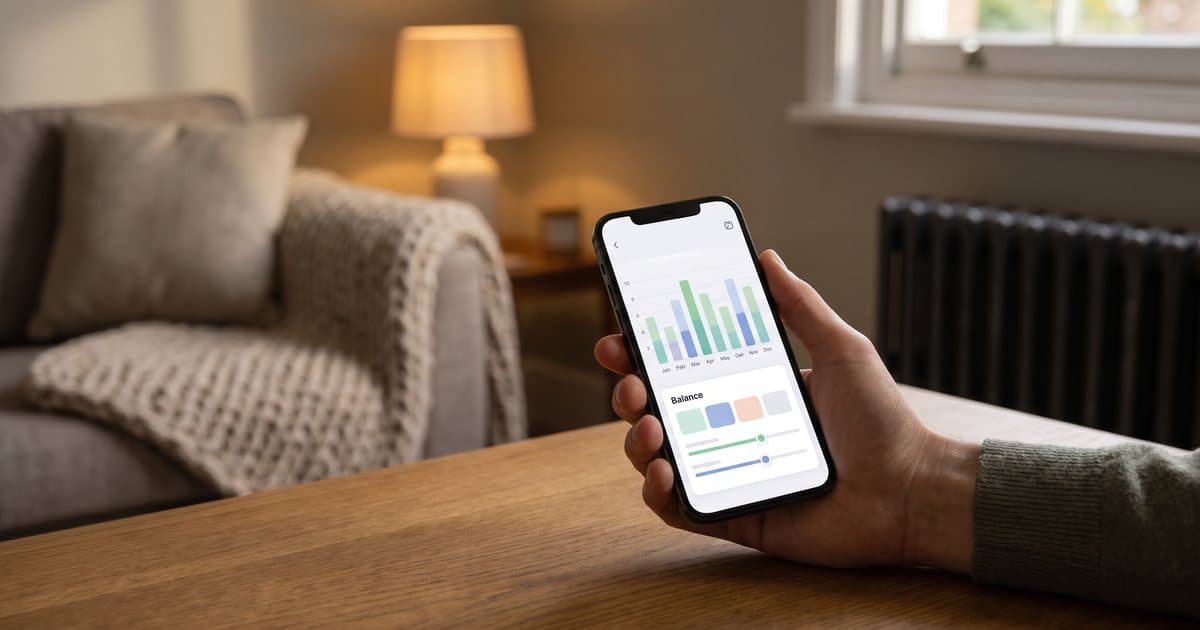
I open it at least twice a week. Without a smart meter, which is my position, it shows the balance, the bills, the tariff and my referral link, and a reading takes a minute to submit. With a smart meter you also get daily usage, a projected cost for the current month and automatic readings. Tariff changes happen in the app without a phone call.
Octoplus, the rewards scheme that sits inside the app, has paid me around £50 in Octopoints so far. Small money, but it is the kind of thing a legacy supplier never offered me in a decade.
The practical effect is that energy stopped being a thing I found out about after the fact. I always know the balance and what the next bill looks like.
It is worth being clear about the limits. The daily usage graphs people praise need a smart meter installed and communicating. I rate the app the best I have used for a utility without one, but if the graphs are what you are switching for, you need the meter first.
Customer Service: What Happened When I Needed Them
I have phoned Octopus once in four years, about a payment and my direct debit. A person answered, they were very responsive, and it was sorted on that call without being transferred or having to explain it twice.
One call is a small sample, so it is fair to test it against the published data rather than my luck. Octopus holds a 4.8 out of 5 Trustpilot score from over 837,000 reviews, which is the highest of any large UK supplier by a wide margin. In the Citizens Advice supplier table for January to March 2026 they scored 3.67 out of 5, near the top of the major suppliers. Ofgem's published complaints data has consistently placed them among the lowest complaint rates of the large suppliers.
The Citizens Advice figure is the one worth reading carefully. It is good, not perfect, and the gap between 3.67 and a hypothetical 5 is real. Reading through the negative reviews, a recurring theme is delays getting a final bill out of the customer's previous supplier, which is a problem Octopus inherits rather than causes. That is genuinely not their fault, but it still happens to you.
Price: Are They Cheap?
Octopus's price claim and your own bill are two different things, and most reviews blur them.
Octopus says its standard prices have always been cheaper than any other large supplier. That is their claim about standard prices, not a promise about your bill.
Energy pricing in Great Britain is regional. Unit rates and standing charges differ by distribution area, which means a supplier that is the cheapest option in the South East may not be in the North West. A national "cheapest supplier" claim is a marketing line, not a fact about your bill.
So the honest instruction is boring: get a quote for your own postcode, compare it against your current unit rate and standing charge rather than against the headline cap, and decide from that. If you want the mechanics of doing that, the step-by-step switching section further down covers the process.
What Octopus does have that is not a pricing claim: no exit fees on the variable tariffs and no minimum term. If a cheaper option appears in six months, leaving costs you nothing. That is worth more than a few pounds of headline difference, because it removes the risk of picking wrong.
Is Octopus Energy Good? The Short Version
If you want the one-paragraph answer to "is Octopus Energy good", here it is. Good on billing, good on the app, good on support both in my experience and in the published data, and competitive on price without being guaranteed cheapest. I have been a customer for four years and I have referred about 50 people in that time, which I would not do for a supplier I was unsure about.
Where it is weaker: the best features depend on a working smart meter, and the referral scheme's search results are full of copycat sites promising money that does not exist. Neither is a reason not to switch. Both are reasons to read the rest of this page before you do.
Switching Around the 1 October Price Cap Change
Ofgem resets the price cap four times a year, on 1 January, 1 April, 1 July and 1 October, and the Flexible tariff moves with it. That leads to the question I get most in autumn: switch before the change, or wait?
On a variable tariff it barely matters. There are no exit fees and no minimum term on Flexible, Tracker or Agile, so a switch that completes in late September does not lock in September's price. You pay the old rate until the reset and the new rate after it, exactly as you would have done with your current supplier.
Where timing does matter is a fixed deal. If you are weighing a fix against Octopus, compare its unit rates and standing charge against the cap period you will be living in, not the one that is about to end. And if you are mid-fix with an exit fee, the usual rule applies: most suppliers waive it in the final 49 days of the contract.
How to Switch to Octopus Energy (Step by Step)
Switching takes about ten minutes online. Ofgem's rules put the switch itself at a maximum of five working days, often two or three, and your supply is never interrupted. Here is the process as it stands.
Step 1: Start from a referral link
Go to share.octopus.energy/ideal-spark-243. Clicking a referral link first is what attaches the £50 credit (£75 for a business). Start a quote on octopus.energy directly, or through a comparison site, and neither side gets it.
Step 2: Enter your postcode and usage
Octopus asks for your postcode and your current usage. A recent bill is useful. If you do not have one, your current monthly direct debit gives a rough guide, and Octopus can estimate from the property.
Step 3: Choose your tariff
The referral link signs you up to a Fixed or Flexible tariff. A fixed tariff gives you a known rate for the term, which is what I am on; Flexible moves with the Ofgem price cap. If you want a smart tariff, switch first, then pick one from Octopus's smart tariffs page. Smart tariffs need a working smart meter and eligibility checks.
Step 4: Complete the application
Fill in your own address, your bank details for the direct debit, and your current supplier's name. Octopus contacts your old supplier and arranges the switch. You do not need to cancel anything yourself. If you are mid-fix with your current supplier, check the exit fee; most waive it in the final 49 days.
Step 5: Wait for the switch
Two to three working days is typical, five is the legal maximum. Your old supplier sends a final bill, and your first Octopus bill arrives on your first direct debit date. There is a 14-day cooling-off period if you change your mind.
Step 6: Receive the credit
Once your first direct debit clears, Octopus adds £50 to your account (£75 for a business). It comes off your next bill automatically, typically two to four weeks after your start date. There is nothing to claim.
What you need to hand: your postcode, a rough annual usage in kWh or your monthly spend, your bank details, and your current supplier's name. Your MPAN and MPRN numbers help but are not required; Octopus can usually find them from your address.
For how the referral scheme itself works on both sides, how to refer someone once you are in, and what voids the credit, see my Octopus Energy referral page.
The Tariffs, Briefly
You do not need a tariff dissertation to make this decision, and I will not tell you which one is best for your home, because that depends on how you use energy.
The referral link signs you up to a Fixed or Flexible tariff. I am on a fixed tariff myself, gas and electric, which I took for the certainty of a known rate. Flexible moves with the Ofgem price cap.
Octopus's smart tariffs are built for homes with an EV, a heat pump, solar panels or a battery. New to Octopus? Switch first, then pick a smart tariff. They need a working smart meter and eligibility checks, and the rates change, so take a look at Octopus's smart tariffs page for the latest details.
Green Credentials
Octopus says all its electricity comes from 100% zero-carbon sources like sun, wind and water, and that it is investing billions in green technology.
Gas is a different story for every UK supplier, so if cutting your home's carbon is the goal, read Octopus's own pages on gas rather than taking a review's word for it. Using less gas does more than any tariff badge.
What I Do Not Like
No supplier review is worth reading if it has no downside section. For the record, nothing in four years has made me think about leaving; these are the things to know before you switch, not complaints.
- Smart meter dependency. The best parts of Octopus, meaning the daily data and the smart tariffs, need a working smart meter. Installation waits vary by region and can run to several weeks. If a smart tariff is your reason for switching, confirm the wait before you commit.
- Price depends on your postcode. If you are optimising purely on unit rate every quarter, compare quotes properly rather than assuming any supplier wins.
- The referral programme attracts noise. The scheme is genuine, but the search results for it are full of single-page sites promising £80 or £100 that are quietly splitting the £50. I wrote about that on my Octopus referral page because it costs people money.
- Scale changes things. Octopus is now the largest UK household supplier. The service quality has held up in my experience, but a company at 8 million customers is a different organisation from the one that built the early reputation, and that is worth watching rather than assuming.
- Final bill delays are common. Not an Octopus failure, but if you switch and your old supplier drags its feet on the closing bill, you will be chasing them, not Octopus.
Who Should Not Switch
Three groups should hold off.
Anyone mid-fix with a real exit fee. Wait for the final 49 days of your contract, when most suppliers waive the charge, then switch.
Anyone who has not checked their own postcode. If you switch on the strength of a national review, including this one, you are guessing. Regional pricing is real. Check first.
Anyone who needs a smart tariff on day one. If the smart meter installation queue in your area is long, the tariff you switched for will not be available when you arrive.
Octopus vs Other Suppliers
I have been with Octopus for four years, so I cannot compare today's service at other suppliers first-hand. These are Octopus's own numbers to set against whoever you are with now:
| Octopus | |
|---|---|
| Trustpilot | 4.8 from 837,000+ reviews |
| Citizens Advice | 3.67 out of 5, January to March 2026 |
| Which? | Which? Recommended energy supplier |
| Exit fees on variable tariffs | None |
| Electricity | 100% zero-carbon sources, per Octopus |
| Referral | £50 each way, £75 business |
On price, compare like for like: an Octopus quote for your postcode against your current unit rates and standing charges. Rates move often, so do not trust any page, this one included, that promises you a saving.
The £50 Referral, Explained Straight
If this review is useful and you decide to switch, the referral costs you nothing and pays you £50.
Switch to Octopus Energy and get £50 credit
share.octopus.energy/ideal-spark-243
The mechanics:
- There is no code to type. The link carries the referral.
- Both sides get £50 on a home account. Business and charity accounts get £75 each.
- The credit is applied after your first direct debit clears, usually two to four weeks after your start date.
- Comparison sites do not carry the referral. If you switch through one, or go direct to Octopus, neither of us gets the credit.
- There is no cap on referrals and no minimum contract term on the variable tariffs.
I have referred about 50 people over four years and every credit has landed. That is the main reason I write about this scheme rather than a dozen others: it pays reliably, both ways, and it does not require the person switching to give anything up.
For the full scheme mechanics, including how to refer someone yourself and what voids the credit, see my Octopus Energy referral page. Business customers get £75 each way; the business section of that page covers who qualifies.
Is Octopus Energy Safe?
Yes. Octopus is regulated by Ofgem and is a member of the Energy Ombudsman scheme, so you have a free escalation route if a complaint stalls.
On supply risk, the collapse of dozens of small suppliers in 2021 and 2022 made this a fair question. It does not apply here. Octopus passed 8 million UK customers in April 2026 and is now the largest household energy supplier in the country, serving roughly one in four households. It has also been the supplier Ofgem appointed to take on customers of failed suppliers, which is the opposite end of that risk.
Your supply itself is never at stake in a switch regardless of supplier. The same wires and pipes deliver your energy no matter who sends the bill.
Frequently Asked Questions
Is Octopus Energy any good?
Yes, on the evidence of four years as a customer and the published data. Billing has been accurate, the app is the best I have used for a utility, and when I phoned support about a payment and my direct debit a person answered and sorted it there and then. Octopus holds a 4.8 out of 5 Trustpilot score from over 837,000 reviews and 3.67 out of 5 in the Citizens Advice supplier table for January to March 2026.
Is Octopus Energy cheap?
Octopus says its standard prices have always been cheaper than any other large supplier. Pricing is regional, so get a quote for your own postcode and compare it with what you pay now.
How long have you been with Octopus Energy?
Four years, gas and electric, on a residential fixed tariff at my home in Essex, without a smart meter. I also run my business from that home office on the same residential tariff.
Is Octopus Energy really 100% renewable?
Octopus says all its electricity comes from 100% zero-carbon sources like sun, wind and water. For gas, read Octopus's own pages for the current detail.
What is Octopus Energy customer service like?
Good, in my experience. One phone call in four years, about a payment and my direct debit, answered by a person and sorted on the call. Octopus consistently sits among the lowest complaint rates of the large suppliers in Ofgem's published data.
Is Octopus Energy safe?
Yes. Regulated by Ofgem, a member of the Energy Ombudsman scheme, and as of April 2026 the largest UK household supplier with over 8 million customers.
Who should not switch to Octopus Energy?
Anyone locked into a cheap fixed deal with a meaningful exit fee should wait for the final 49 days of the contract. Anyone chasing the single lowest unit rate in their region should compare properly first. Anyone who needs a smart tariff immediately should check the smart meter installation wait in their area.
What is the Octopus Energy app like?
The best I have used for a utility, and I say that without a smart meter: balance, bills, tariff and referral link, opened at least twice a week. With a smart meter you also get daily usage and a projected monthly cost.
Which Octopus Energy tariff is best?
There is no single best one. The referral link signs you up to a Fixed or Flexible tariff, and smart tariffs come after you switch. Octopus's own tariff pages have the current details, so read those and decide what fits your home.
Does Octopus Energy charge exit fees?
Not on the variable tariffs, and there is no minimum term on those. Fixed tariffs carry their own terms, so check before signing up to one.
How much is the Octopus Energy referral bonus?
£50 for you and £50 for me on a home switch through my referral link. Business and charity accounts get £75 each way. The credit lands after your first direct debit clears, usually within two to four weeks.
Can I get the referral credit if I already switched?
Do not count on it. The credit is tied to starting from the link. You can ask Octopus at hello@octopus.energy, but there is no promise.
Should I switch to Octopus Energy before or after the October price cap change?
On a variable tariff it makes little difference. The cap resets on 1 January, 1 April, 1 July and 1 October and Flexible moves with it, with no exit fees and no minimum term, so a late-September switch does not lock in the old price. If you are comparing a fixed deal, measure it against the cap period you are about to enter.
How do I switch to Octopus Energy?
Click a referral link, enter your postcode and usage, choose a Fixed or Flexible tariff and complete the application with your bank details and current supplier's name. Octopus handles the old supplier. About ten minutes online; the step-by-step is above.
How long does switching to Octopus Energy take?
Within five working days, the maximum Ofgem allows, and often two or three. Supply is never interrupted. The referral credit follows about four weeks after joining, once your first direct debit has cleared.
Do I need to contact my current supplier?
No. Octopus arranges the switch and the cancellation. If you are mid-fix you may owe an exit fee, which most suppliers waive in the final 49 days.
Will my energy be cut off when I switch?
No. The same wires and pipes deliver your energy whoever bills you.
What information do I need to switch?
Postcode, a rough annual usage or monthly spend, bank details for the direct debit, and your current supplier's name. MPAN and MPRN help but are not required.
The Verdict
Four years in, Octopus Energy has done the things I care about in an energy supplier: bills that match usage, an app that tells me what is happening, and support that fixes a problem in one go. The referral scheme pays reliably in both directions, which is rare enough to be worth saying.
What it is not is a guaranteed cheapest option for every postcode in every quarter. Anyone telling you otherwise is selling something. Check your own numbers, then switch if they stack up.
Switch to Octopus Energy and get £50 credit
Both of us get £50 once your first direct debit clears. Business and charity accounts get £75 each.
More Energy and Money Guides
- Octopus Energy referral code, the link, the full offer terms, how to refer a friend, what voids the credit, and the £75 business tier.
- Do you need a business energy tariff working from home?, the rule that decides it, and why I stayed on a residential tariff.
- Best cashback sites UK, other ways I cut household and business costs.
Mike McDonnell. I write The Growth Toolkit, a free Sunday email on getting the most out of AI, with the setups I use explained in plain English.
Other referral codes worth using
TopCashback
£10: £10 sign up bonus for a new member who joins via my referral link and meets the current offer terms (I earn £30). The amount changes from time to time, so check it at sign-up (as of August 2026).
Get the code →Monzo
£50: £50 each on Monzo Business, £10 each on a personal current account
Get the code →AJ Bell
£100: £100 Amazon.co.uk gift card each when a new customer opens an AJ Bell SIPP, ISA, Lifetime ISA or Dealing account and funds or transfers in a combined £10,000 within 120 days
Get the code →

Mike McDonnell
Entrepreneur, author, and mental health advocate based in Great Notley, Braintree, Essex. I write about building businesses while managing bipolar disorder.
You might also like
Octopus Energy Referral Code: £50 Each, How to Refer a Friend, £75 for Business (October 2026)
Use my Octopus Energy referral link for £50 free credit when you switch, £75 for a business. How the refer a friend scheme pays both sides, how to refer someone yourself, and what voids the credit.
Tide Promo Code October 2026: No Separate Code, £100 Each
Tide has no separate promo code. The live offer is referral code JJ2WDY: £100 each after £500 of card spend in 90 days. Verified against Tide's own terms.
Do You Need a Business Energy Tariff Working From Home? (I Don't)
I run a limited company from a home office on a residential energy tariff. Here is the rule that decides which tariff you need, what a business contract costs you in protections, and the VAT and tax points that matter.