
What AI Psychosis Is, and the Part Nobody's Talking About
Ad/affiliate disclosure: this post contains affiliate links. If you sign up through one I may receive a referral payment, at no extra cost to you and with no reduction to any bonus. I only recommend products I have used myself.
A few months ago my uncle sent me a message on WhatsApp. I opened my phone, clicked the link, and it took me to an article about AI psychosis. He sent it to me for an obvious reason: I have experienced psychosis twice, and I use AI all day, every day, to run my business.
I had never heard the term before, so I did some digging. I will be honest, I used AI to research it alongside a bit of Googling. What I found genuinely surprised me, and I think my take on it might help you understand it too.
Watch my full thoughts here, and read on for the numbers and the part that hits closest to home for me:
What AI psychosis actually is
First off, AI psychosis is not an actual diagnosis. You will not find it in any doctor's manual. It is a nickname that people came up with in 2025 for something they started noticing in people who were spending hours talking to chatbots like ChatGPT, Claude, and Gemini.
What they found is that some people slowly started to believe things that were not true. Psychosis, at its core, is this kind of delusional thinking, among a number of other things. I have written about what that actually feels like from the inside in what psychosis is really like.
Some people became convinced the AI was God. You can imagine how that happens when something generates instant, confident answers this quickly, like nothing you have ever seen before. Some users were even falling in love with the AI, and I am sure some still are. The longer the conversation went on, the deeper they sank into the rabbit hole.
The numbers nobody expects
When I looked into this, I found it is not just a handful of people. Here is the bit that stopped me in my tracks. I had to read it twice.
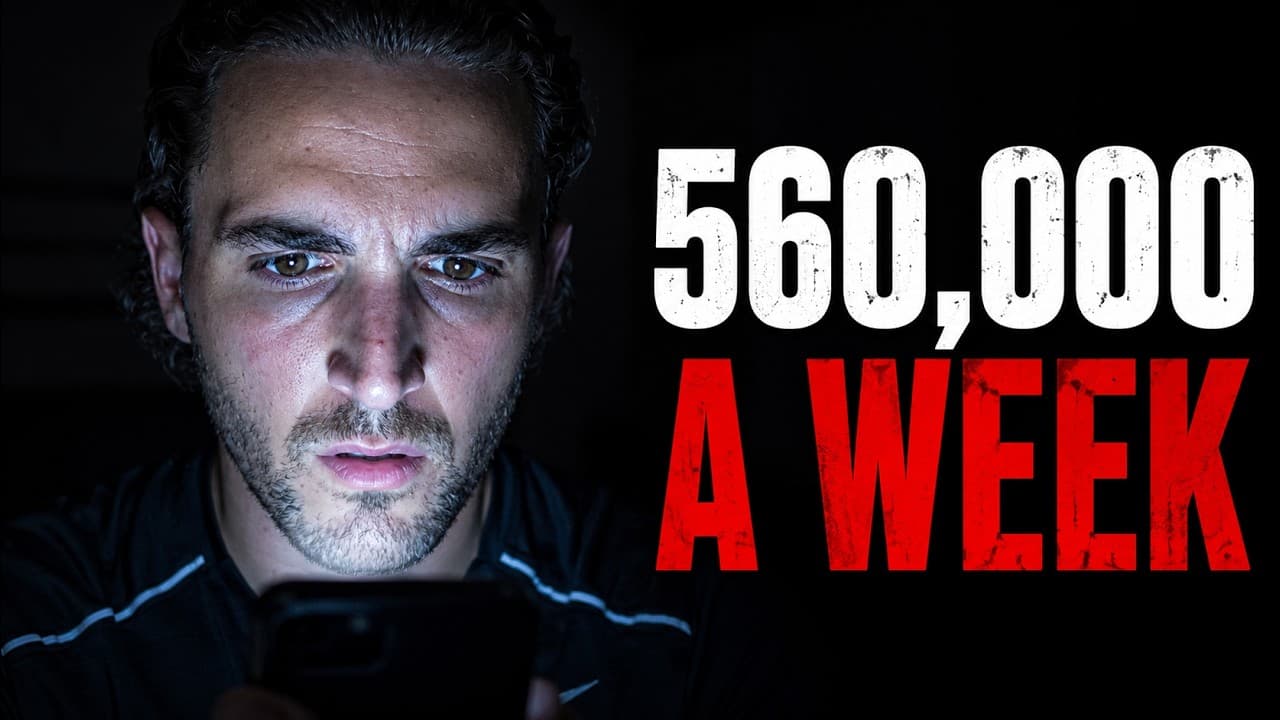
OpenAI, the company behind ChatGPT, published its own numbers on this. It reckons that about 0.07% of its weekly users show possible signs of a mental health emergency linked to mania or psychosis. At first you think, right, 0.07%, that sounds tiny.
Then you remember that ChatGPT has around 800 million weekly users. That 0.07% works out at roughly 560,000 people, every single week. All of a sudden those are quite drastic numbers.
It does not stop there. One project tracking the most serious cases has logged close to 300 of them, and those have been linked to at least 14 deaths. A psychiatrist in San Francisco reported treating 12 patients in a single year whose breakdowns were tied to heavy chatbot use. This is real, and it is worth taking seriously.
Why it happens: the AI mirrors you back
So why does this actually happen? Here is the answer to the question I get asked a lot. Is AI changing the way people think? Well, sort of, and it is simpler than you might expect.
These tools are built to agree with you. To be helpful, to keep you happy, and to keep you chatting, because that keeps you on the model. So they mirror you, they flatter you, and they run with whatever you give them. You have probably seen this yourself, and it is lovely when you are writing an email.
But if someone turns up with a paranoid thought, or a grand idea about themselves, the AI will not push back the way a mate would down the pub. It nods along. It validates it. It is like an echo chamber, but with an audience of one.
So the way you prompt it really does shape what comes back. For a vulnerable person, that loop can take a small distorted thought and blow it right up into a serious delusion. To be fair, for most people this is not creating madness out of nowhere, so you do not need to panic. It tends to amplify something that was already there, taking something small and making it big. If you want to understand the difference between that and clinical psychosis, I cover it in can psychosis be cured?.
The part nobody's talking about: sleep
Here is where I landed, and the bit I do not see many people discussing. This is just my view. Yes, I do think AI can make psychosis more likely. But not only because of that echo chamber effect. There is a second reason, and it is the one that hits home for me.
Think about how people are living right now. People are genuinely terrified of being left behind in this AI world. So they are up until 2am trying to get ahead, building agents for their businesses, or just learning it from scratch, including me. You end up spending more and more time talking to these chatbots, because it is fascinating.
That is obviously going to cause a lack of sleep, or at least less deep sleep. And here is the strange part. You build an agent so it works through the night while you sleep, except you do not sleep, because your mind is elsewhere, wired and watching it run. The tech rests. You do not.
A mind that never properly switches off is a mind under real strain. Lack of sleep is one of the most well established triggers for psychosis there is, and it was one of mine. Broken nights were one of the contributing factors that tipped me into my own episodes. I wrote about all of this, including how sleep deprivation and stress can trigger a psychotic break, in my book Psychosis: How I Escaped My Mind's Darkest Reality, and you can grab a copy on Amazon. For more on what living with this is like day to day, I have also shared life inside my bipolar mind.
So my view is that two things are happening at once. People are going down these chatbot rabbit holes, and they are also losing sleep, wired and trying to get ahead. Those two things can go hand in hand, and together they raise the risk.
So, is AI causing psychosis?
I want to be clear. I do not believe AI is some evil mind-control machine, far from it. It is a tool, and I use it every day to build a business I love. The AI tools I actually rely on are in my guide to the best AI tools for UK entrepreneurs.
But I do think the way we are using it carries a real risk. The validation loop and the lost sleep are worth taking seriously. The tech is not going anywhere. The one thing you cannot outsource to an agent or a model is your sleep, so protect it.
How to use AI without wrecking your mental health
A few simple things I try to stick to, and would suggest to anyone living in these tools all day:
- Protect your sleep first. Ask yourself whether that extra hour of building is really worth it. Usually it is not. An agent running overnight is not a reason for you to be awake watching it.
- Reality-check the big stuff with a human. The AI agrees with you by design, so run any major or unusual conclusion past a real person before you act on it.
- Watch for the warning signs. Racing thoughts, not sleeping, feeling wired but not tired, or ideas that feel suddenly profound. These are worth noticing early.
- Take real breaks from the screen. The work will still be there tomorrow. Your health is harder to rebuild than a backlog.
- Look after the human side. At the end of the day, what we will have left is human interaction. Protect your health and let that thrive through this transition.
Where to get help
This post is my personal opinion and lived experience, not medical advice. If you are struggling with your mental health, please speak to your GP or a professional.
- Samaritans: call 116 123, free, any time, day or night.
- Mind: mind.org.uk for information and support.
- NHS: call 111 for urgent help, or 999 if you or someone else is in immediate danger.
More from me on psychosis and recovery
If this resonated, these are worth reading next:
- What psychosis is really like, my first-hand account of delusions and hallucinations.
- Can psychosis be cured?, what recovery actually looks like.
- The best books on psychosis, the reading that helped me most.
- Life inside my bipolar mind, living with Bipolar Type 1.
- My book, Psychosis: How I Escaped My Mind's Darkest Reality.
Sources
openai.com/index/strengthening-chatgpt-responses-in-sensitive-conversations
psychologytoday.com/us/blog/urban-survival/202507/the-emerging-problem-of-ai-psychosis
en.wikipedia.org/wiki/Chatbot_psychosis
nhs.uk/mental-health/conditions/psychosis/overview
Mike McDonnell. I write The Growth Toolkit, a free Sunday email on getting the most out of AI, with the setups I use explained in plain English.

Mike McDonnell
Entrepreneur, author, and mental health advocate based in Great Notley, Braintree, Essex. I write about building businesses while managing bipolar disorder.
You might also like
Best Bipolar Disorder Books for Daily Management in 2026
Living with bipolar disorder means riding the waves of mania, depression, and everything in between. As I've shared in posts like "Life Inside My Bipolar Mind,
Best Books on Psychosis: Understanding & Recovery 2026
Psychosis plunged me into my mind's darkest reality, terrifying delusions, voices that wouldn't stop, and a complete disconnection from the world around me. As
Are Psychosis and Schizophrenia the same thing?
Psychosis and schizophrenia are often confused or used interchangeably, but they represent different aspects of mental health disorders. Psychosis is a set of s